
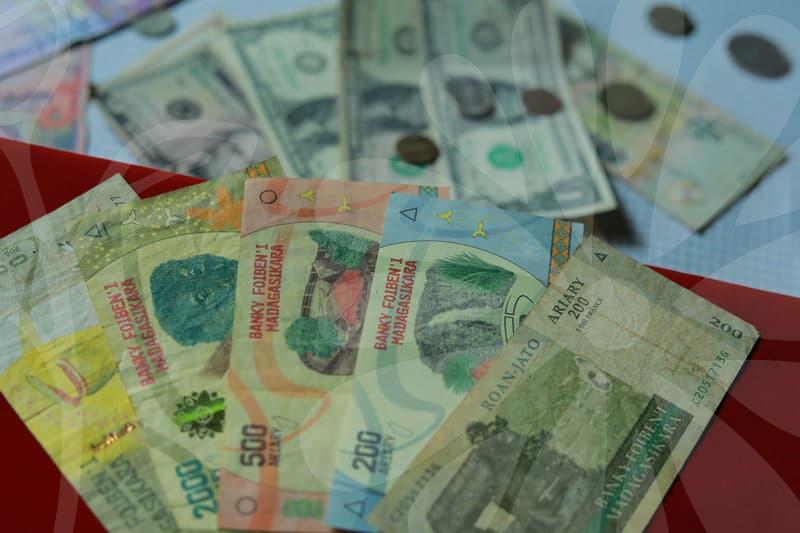
Overseas Investment: Why EXCHANGE Rates Matter
The Constant Dance of EXCHANGE Rates in Global Portfolios
When venturing into overseas investments, many focus intensely on the performance of the underlying asset itself – be it a stock, bond, or real estate. However, a critical and often underestimated factor is the movement of foreign exchange rates. Your investment’s success in its local currency is only half the story; the other half is how its value translates back into your home currency.
This dynamic interplay means that a robust gain in a foreign market can easily evaporate, or even turn into a loss, if the currency in which you invested depreciates significantly against your own. Understanding this constant dance between asset performance and currency fluctuations is paramount for anyone looking to build a truly successful international portfolio. It’s not just about picking winners; it’s about navigating the ever-shifting currency landscape.
Deconstructing Foreign EXCHANGE Risk: A Cause-and-Effect View
Foreign exchange risk, at its core, stems from the inherent volatility of currency values. The cause is simple: the relative value of one country’s currency against another is constantly changing due to a multitude of economic, political, and market factors. This fluctuation creates a direct effect on your investment’s return when it’s converted back to your domestic currency.
For example, if you invest in a U.S. dollar-denominated asset and the U.S. dollar strengthens against your home currency (say, the South Korean Won), your investment’s value in Won terms increases. Conversely, if the U.S. dollar weakens, your investment’s value in Won terms decreases, even if the asset itself performed well in dollars. This direct cause-and-effect mechanism means that currency movements can magnify or diminish your actual realized gains or losses, irrespective of the asset’s performance.
Strategic Approaches to Mitigating EXCHANGE Rate Exposure
Effectively managing foreign exchange exposure is a cornerstone of prudent overseas investing. One primary strategy is diversification across different currency zones. By holding assets denominated in various currencies, such as USD, EUR, and JPY, you spread the risk, ensuring that a significant depreciation in one currency doesn’t cripple your entire international portfolio.
For those seeking more direct control, hedging instruments can be employed. These include forward contracts to lock in an exchange rate for a future transaction or currency-specific exchange-traded funds (ETFs). While these tools offer protection, they come with associated costs and can limit potential upside if the foreign currency moves favorably. For many retail investors, focusing on well-diversified global investment funds or ETFs that already manage currency exposure internally presents a more accessible and less complex route to mitigating risk.
EXCHANGE Rate Management: The Trade-offs Investors Face
Engaging in foreign exchange management, especially through hedging, presents a clear set of trade-offs. The primary benefit of hedging is the reduction of uncertainty; it allows investors to lock in a known exchange rate, providing predictability for future returns. However, this certainty comes at a cost. Hedging strategies often involve premiums or transaction fees, which directly reduce overall investment returns.
Moreover, if the foreign currency unexpectedly strengthens significantly against your home currency, a hedged position will cap your gains, leaving you worse off than an unhedged investor. Consider the management of substantial foreign exchange reserves, such as South Korea’s, which once stood at over $423.6 billion. Attempting to hedge such a vast sum would incur enormous costs and require sophisticated financial expertise, potentially outweighing the benefits of mitigating minor currency fluctuations. It’s a constant balancing act between security and potential profit.
Concrete Data: Foreign Reserves and Investor Activity
Understanding the scale of international financial flows often provides critical context. South Korea’s foreign exchange reserves, a key indicator of a nation’s financial stability and its capacity to manage currency shocks, stood at over $423.6 billion at the end of March. This substantial figure reflects the aggregate of various currency holdings, which are themselves subject to exchange rate fluctuations.
On the investor front, observing capital movements offers further insight. For example, during certain periods, overseas investors have resumed buying on the Korea Exchange, with one instance showing net purchases of 810 billion won, equivalent to approximately $537 million. This influx of $537 million represents real capital being deployed into the market, a decision heavily influenced by expectations of currency stability and future returns. Such data points highlight the dynamic nature of international investment and the ever-present influence of currency markets on capital flows.
Navigating the EXCHANGE Maze: Who Benefits Most?
Ultimately, a deep understanding of foreign exchange dynamics benefits those who are actively participating in global markets. Long-term investors, institutional portfolio managers, and individuals who regularly engage with international assets stand to gain the most from mastering these concepts. By accounting for currency risk, they can more accurately forecast returns and make informed decisions.
The key takeaway is that currency risk is not an abstract concept but a tangible factor that can significantly alter investment outcomes. For many, the first actionable step is to familiarize themselves with the basic mechanics of major currency pairs relevant to their investments. Checking reputable financial news outlets for currency market analysis provides ongoing education.
However, this advice is not applicable to investors who solely focus on domestic markets. Alternatively, for those overwhelmed by the complexity, consulting with an experienced financial advisor specializing in international investments can provide personalized strategies and a clearer path forward.




That example with the Won really drove home how quickly things can shift. I’ve been trying to wrap my head around how a seemingly minor movement in the Euro-Dollar exchange rate can completely flip a portfolio’s projected growth.
That diversification across zones makes a lot of sense. I was reading about how some emerging markets actually *increase* their currency volatility to discourage foreign investment – a really interesting dynamic.