
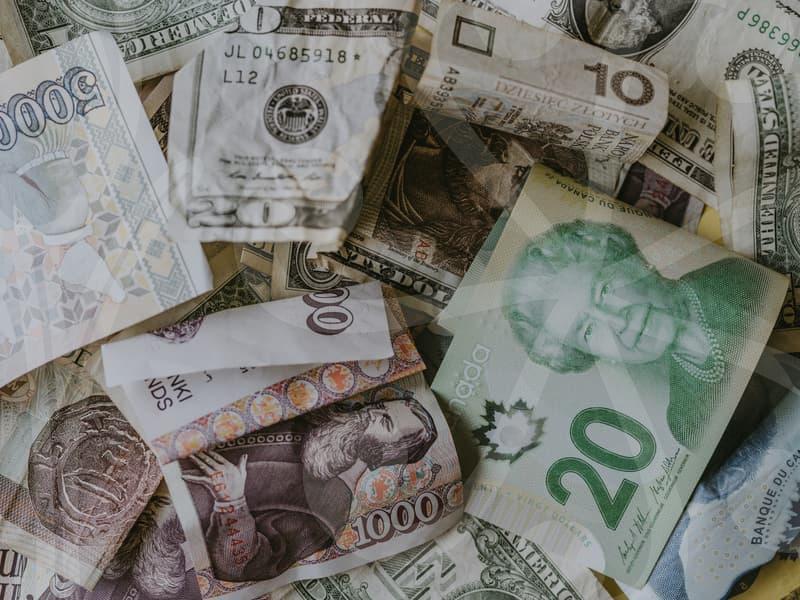
Mastering Forex Trading for Overseas Investments
What Exactly is Forex Trading?
Forex trading, short for foreign exchange trading, is the global marketplace where currencies are bought and sold. It’s the largest and most liquid financial market in the world, with a daily trading volume that can exceed $6.6 trillion USD. This immense scale means that prices are generally very competitive, and transactions can be executed quickly.
At its core, forex trading involves speculating on the movement of currency prices. When you trade forex, you are simultaneously buying one currency and selling another. For instance, if you believe the Euro will strengthen against the US Dollar, you would buy EUR/USD. Understanding this fundamental buy-sell dynamic is crucial before diving deeper.
Why is Forex Trading Essential for Global Investors?
Investing in foreign markets inherently involves currency conversion. Whether you are buying stocks in New York, bonds in London, or real estate in Tokyo, your initial capital must be exchanged into the local currency, and any profits repatriated must be converted back. This process exposes your investment returns to the fluctuations of exchange rates.
This is where forex trading becomes indispensable. It allows investors to manage currency risk, also known as exchange rate risk. By engaging in forward contracts or other hedging instruments, investors can lock in an exchange rate for a future transaction, protecting their portfolio from adverse currency movements. Without such measures, a strong investment performance could be wiped out by an unfavorable shift in the currency market.
Consider a Korean investor purchasing US stocks. If the Korean Won strengthens significantly against the US Dollar while their investment remains unchanged, the value of their US holdings, when converted back to Won, will decrease. Effective forex trading strategies act as a shield against these unpredictable currency headwinds.
The Trade-offs and Risks in Forex Transactions
While forex trading offers essential hedging capabilities, it is not without its challenges and inherent risks. The most significant is volatility. Currency markets can experience rapid and substantial price swings due to geopolitical events, economic data releases, or central bank policy changes. This means that while gains can be amplified, so too can losses.
A common pitfall for many investors is improper hedging. Over-hedging, for example, can negate potential gains if the foreign currency unexpectedly strengthens, effectively capping your upside. Conversely, under-hedging leaves your investments vulnerable to currency depreciation. Finding the right balance, often through careful analysis and continuous monitoring, is a critical trade-off investors must navigate.
Furthermore, transaction costs, primarily the bid-ask spread, can erode profitability, especially for active traders or those dealing with smaller transaction sizes. The spread represents the difference between the price at which you can buy a currency and the price at which you can sell it, and it is a direct cost of every forex transaction. For major currency pairs like EUR/USD, spreads might be tight, perhaps around 2 to 5 pips, but for less liquid pairs, they can widen considerably.
Practical Steps for Engaging in Forex Trading
To actively participate in forex trading for investment purposes, the first step is typically opening an account with a reputable brokerage that offers foreign exchange services. You’ll need to provide identification and financial information, similar to opening any investment account. The account setup process usually takes a few business days to complete.
Once your account is active, you’ll need to understand how to interpret exchange rates and place orders. Pay close attention to the bid-ask spread, as this is your immediate cost. For instance, if the EUR/USD rate is quoted as 1.0850/1.0852, the bid price (what you can sell Euros for) is 1.0850, and the ask price (what you can buy Euros for) is 1.0852. The spread here is 2 pips.
Leverage, offered by many brokers, allows you to control a larger position with a smaller amount of capital. While this can magnify profits, it equally magnifies losses, making it a tool that requires extreme caution and a solid understanding of risk management. Always check the latest FX rate information and your broker’s fee structure before executing any trade.
When Does Forex Trading Not Apply?
Directly engaging in forex trading as an individual investor might not be necessary for everyone. If your overseas investments are made through diversified mutual funds or ETFs that handle currency hedging internally, you may not need to manage forex transactions yourself. These products often absorb currency risk as part of their management strategy, simplifying the investment process for the end-user.
Moreover, for individuals making only occasional, small currency conversions for personal travel or minor international purchases, the complexities and costs associated with dedicated forex trading accounts might outweigh the benefits. In such cases, using a travel card or standard bank exchange services might be more practical and cost-effective.
The most direct beneficiaries of active forex trading are institutional investors, multinational corporations managing international cash flows, and individual investors with substantial foreign holdings who require precise control over their currency exposure. For others, the indirect management of currency risk through specialized investment vehicles may suffice.
This information is most beneficial for those actively managing international portfolios or engaged in cross-border business activities. For investors solely focused on domestic markets, the intricacies of forex trading may be less relevant, though understanding its impact on global economic conditions can still provide valuable context.



That’s a really clear example of how exchange rate fluctuations can impact returns. I was thinking about how a sudden shift like that could disproportionately affect retirement funds held in foreign currencies.
That’s a really clear explanation of the bid-ask spread. I’ve always thought about it like a tiny tax on every trade, and it’s easy to underestimate how quickly those small fees can add up.
The forward contracts idea really highlights the potential for protecting gains – I’ve been researching options strategies for similar risk management and this feels like a really solid foundation.