

Navigating Currency Exchange: Beyond the Obvious Choices
Deciding where to exchange currency can feel straightforward, but the reality is often more complex, especially when you’re dealing with significant amounts or specific currencies. I learned this firsthand a few years back when I needed to exchange a considerable sum of US dollars for Japanese Yen before a trip. My initial thought was to just head to the nearest bank branch in Busan. It seemed like the safest, most reliable option, right?
The Bank Default: Safe but Not Always Smart
Banks are the go-to for many when it comes to currency exchange. They offer a sense of security and legitimacy. For smaller amounts, or if convenience is paramount, this is often perfectly fine. You can walk into any major bank, and they’ll handle your request. However, what I discovered is that their exchange rates are rarely the most competitive, especially for less common currency pairs or larger transactions. The difference might seem small on paper, perhaps only a few percentage points, but when you’re talking about, say, exchanging $10,000 USD, that can add up to a noticeable amount lost in the conversion.
I remember looking at the rate offered by my bank for Yen and then comparing it online to what some of the private exchange booths in areas like Nampo-dong (a known spot for them in Busan) were offering. The difference was stark. The bank’s rate was significantly less favorable. This made me hesitate; was the perceived security of the bank worth the tangible loss in exchange value? It felt like paying a premium for peace of mind I didn’t necessarily need for this particular transaction.
Exploring the Alternative: Private Exchange Booths
This led me to investigate private exchange offices, often found in busy commercial areas like Myeongdong in Seoul, or specific districts in other major cities. These places can offer much sharper exchange rates, particularly for popular currencies like USD, JPY, or EUR. The appeal is obvious: more of your money converts into the foreign currency you need. For instance, I’ve seen some private booths offering rates that are 1-2% better than the banks. If you’re exchanging a significant amount, this translates directly into savings.
However, using these places isn’t without its own set of considerations. My hesitation stemmed from a few things. Firstly, the physical appearance of some booths can be less polished than a bank, which can be unnerving. You’re trusting an individual or a small business with your money. Secondly, not all private exchange offices are created equal. Some might have hidden fees or less transparent practices. I recall reading about a situation where someone thought they got a great rate, only to find out later there was a hefty commission hidden in the fine print. It’s crucial to ask about the total cost, including any fees, before committing.
The Airport Conundrum: Convenience vs. Cost
Airports are another common place people exchange currency, especially if they realize at the last minute they need foreign cash. Both Incheon (ICN) and Gimhae (PUS) airports have numerous exchange booths, often operated by major banks like KB Kookmin or Hana Bank. They offer unparalleled convenience – you can exchange money right before your flight. For instance, KB Kookmin Bank operates 24/7 at Incheon Airport, making it accessible at any hour. This is a huge plus if you have an odd flight schedule.
But this convenience comes at a steep price. Airport exchange rates are notoriously unfavorable. They know you’re in a bind, and they charge accordingly. I’ve seen rates at airport exchange booths that are worse by as much as 5-7% compared to city-based private exchanges or even banks. It’s a trade-off: you pay a significant premium for the ultimate convenience. For a small amount, it might be worth it to avoid the hassle, but for larger sums, it’s financially painful. It’s like buying a bottle of water for 5,000 KRW at a tourist attraction when it costs 1,000 KRW at a convenience store just a few blocks away.
Factors to Consider: Making the Right Choice
So, when should you use which? It really depends on your priorities and circumstances.
- Banks: Best for smaller amounts, when you prioritize absolute security and simplicity, or if you need specific services like exchanging foreign coins (though not all banks readily stock or accept them).
- Private Exchange Booths: Often the best for larger amounts of popular currencies when you want the most favorable exchange rate. This requires a bit more research and potentially traveling to a specific area known for these services. I’d estimate this could save you 1-3% on the total amount exchanged compared to banks.
- Airport Exchange: Only recommended for very small, emergency amounts when convenience is the absolute, non-negotiable priority. The cost is simply too high otherwise.
Common Mistakes and Unexpected Outcomes
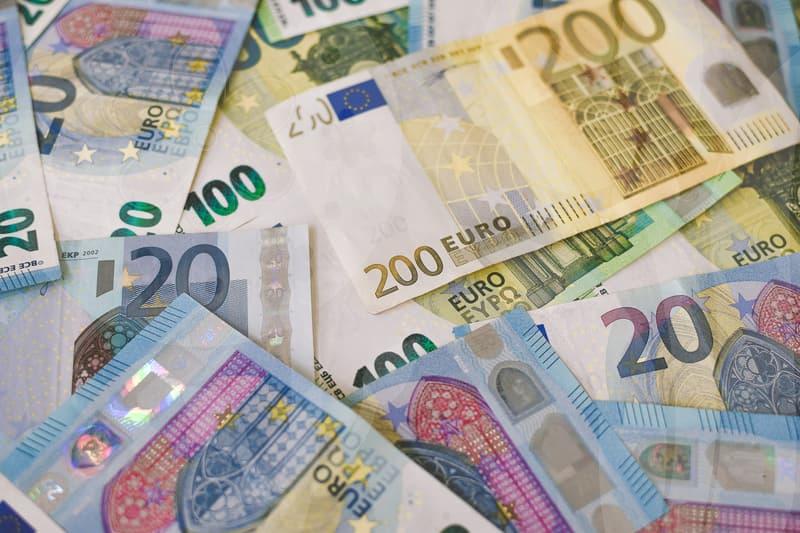
A common mistake people make is assuming all exchange options offer similar rates. They’ll walk up to the first window they see at the airport or use their bank without comparing. Another mistake is not factoring in potential fees. I remember a colleague who exchanged a significant amount of Euros for a trip to Italy. He thought he got a good deal at a private exchange, but when he later checked, he realized the ‘no commission’ rate was actually quite poor, effectively embedding the commission into the rate itself. It was a tough lesson in not taking advertised rates at face value.
One time, I went to a private exchange in Busan hoping for a specific rate on Thai Baht. They didn’t have a significant amount of Baht on hand, so they offered me a much lower rate than advertised, claiming it was due to limited stock. This was an unexpected outcome; I had assumed they would always have sufficient currency. It made me realize that even with private exchanges, availability can be an issue, especially for less common currencies or in smaller cities.
When Doing Nothing is an Option
It’s also worth considering if you even need to exchange cash. In many popular tourist destinations, especially in Japan or parts of Europe, credit card usage is widespread. For my last trip to Tokyo, I relied heavily on my credit card and only exchanged a small amount of Yen for specific situations like small local eateries or convenience stores. This significantly reduced the need for currency exchange and the associated risks and costs. If your destination is highly card-friendly, minimizing cash exchange can be the smartest financial move.
Conclusion: Who is This For?
This advice is most useful for individuals planning international travel who are looking to optimize their spending by getting the best value for their currency exchange. It’s for those who are willing to put in a little extra effort – perhaps 15-30 minutes of research or a short detour – to potentially save a noticeable amount of money.
If you are exchanging a very small amount (under $100 USD equivalent), or if you have extremely limited time and absolute convenience at the airport is your only concern, then focusing heavily on finding the absolute best rate might not be worth the effort. In such cases, sticking with a bank or even the airport exchange might be acceptable.
A realistic next step? Before your next trip, try comparing the exchange rate offered by your bank versus a few online currency exchange aggregators or checking the rates of known private exchange booths in areas like Myeongdong or Nampo-dong. You might be surprised by the difference, even for smaller amounts.
Ultimately, this perspective is based on navigating these choices in real situations. The ‘perfect’ exchange rate is an ideal, but in practice, we often settle for the best practical option given our constraints, accepting that there might be small imperfections or trade-offs involved.



That’s a really helpful breakdown. I’ve definitely been burned by those seemingly ‘no commission’ rates before – it’s so easy to get caught off guard when you’re not scrutinizing the total cost.
That’s a really clear example of how those ‘no commission’ rates can be misleading. I had a similar experience with a currency exchange in Mexico – it highlighted the importance of actually calculating the total cost.
That’s a really insightful point about Tokyo – I always assumed I’d need a ton of cash, but it was so easy to manage with cards. I’ll definitely keep that in mind for my upcoming trip to Italy.
I found a similar situation when I compared rates for Euros in Busan. It’s really interesting how much the perceived safety of a bank can outweigh the actual savings.